
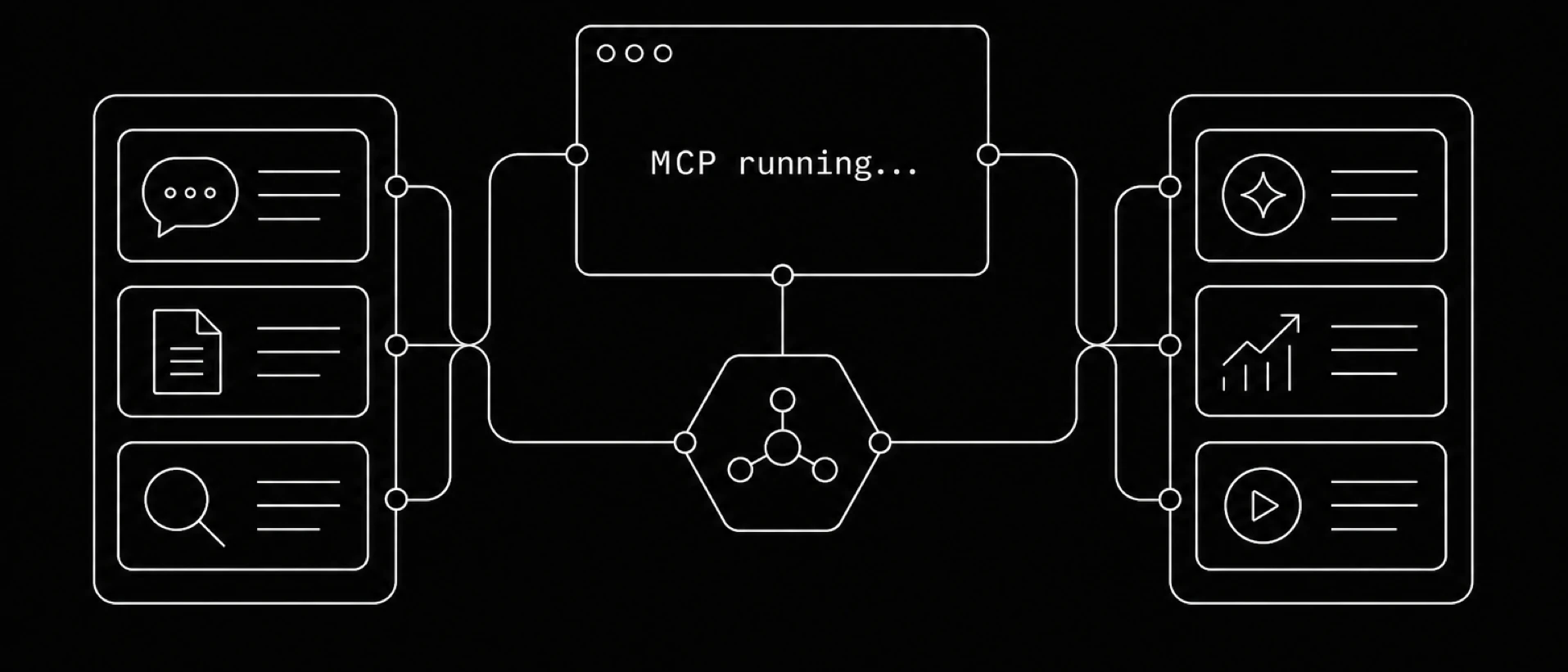
I kept seeing the same request from creators and makers: can I ask my AI tool what to write, what to build, or where my brand shows up, without wiring five different APIs? That is what Cite42 is now. It is one content and search data MCP server and API for AI visibility, rankings, citations, SEO keywords, Google Trends, Reddit, and YouTube data.
The point is simple. You ask Claude Code, Codex CLI, Cursor, or Claude.ai a plain English research question. Your agent calls Cite42. You get structured data back instead of a pasted screenshot, a brittle scraper, or another dashboard you have to remember to open.
Use one data layer for content and AI visibility
A creator might ask, "Is this topic worth a video or a blog post?" A maker might ask, "Which AI visibility tool should I build for Shopify stores?" A founder might ask, "Does ChatGPT mention us when buyers ask for the best tool in our category?"
Those questions cut across AI answers, classic search demand, citations, Reddit threads, YouTube titles, and competitor mentions. Most products force you to collect those signals in different places. Cite42 puts them behind one key and one JSON contract.
You can use the API directly from code. You can also install the MCP server and let your AI agent pick the tool. Both paths hit the same endpoints.
Query rankings, citations, keywords, and trends
Cite42 is not only an AI brand tracker. It is a set of content and search data endpoints that work together. Some calls query AI models. Some calls query classic demand sources. The response shape is built for agents and apps.
- AI visibility and rankingsUse /v1/search, /v1/rankings, and /v1/compare to see what ChatGPT, Claude, Perplexity, Gemini, and Google AI Overviews say about a brand, product, or category.
- AI citationsUse /v1/citations to see which URLs models cite, whether your page appears, and which competitor pages are being used as sources.
- SEO keyword dataUse /v1/keywords to pull search volume, CPC, competition, and keyword ideas your AI can use in a content plan.
- Trends and audience signalsUse /v1/trends, /v1/reddit/trends, and /v1/youtube/trends to check movement, repeated questions, pain points, title patterns, and creator angles.
- Workflow plansUse /v1/workflows/* endpoints to ask for a job like content opportunities or a citation gap audit. The response tells your AI which primitive endpoints to call next.
The API stays boring on purpose. JSON in, JSON out. No exported CSV ceremony. No hidden dashboard state. If you want a report, a content brief, a video idea list, or a small vertical SaaS feature, build it on top.
MCP makes the data usable while you work
The API is useful when you are building a product. MCP is useful when you are working in an AI tool all day. I do not want to leave Claude Code or Codex just to check whether a topic has search demand, whether AI models cite my page, or whether a competitor is showing up more often than I am.
With the MCP server installed, you can ask:
- Which topics should I write about this month?
- Which of my pages does AI cite for this query?
- What keywords and Reddit questions should this article cover?
- Who does ChatGPT recommend instead of my product?
Your AI decides which Cite42 tool to call, runs it, and writes from returned data. That is the part I care about. It keeps research inside the place where you already make the decision.
Use endpoints for facts and workflows for plans
I think about the product in two layers. Endpoints answer one concrete question. Workflows return a plan for a larger job.
| Endpoints | Workflows | |
|---|---|---|
| What you ask | What does AI cite for this page? | Find content opportunities for this niche. |
| What returns | Structured data from one endpoint. | Aggregated results from every endpoint in the workflow, in one call. |
| Examples | /v1/rankings, /v1/citations, /v1/keywords | /v1/workflows/content-brief, /v1/workflows/topic-demand |
| Best fit | Apps, scripts, dashboards, and direct checks. | Agents that need to plan before calling data sources. |
How pricing works
Cite42 is pay per call. You top up credits, call endpoints when you need them, and the balance goes down only when a billable call succeeds. Credits never expire.
AI-model endpoints bill per model queried. For example, rankings start at $0.01-$0.06 per model. Classic data endpoints are flat: keywords are $0.19 per lookup, Google Trends is $0.05 per lookup, and Reddit or YouTube trend reads are each $0.05.
The full catalogue lives in our pricing page. Workflow contracts are currently $0.74. That price is derived from the primitive endpoints in the workflow and the selected model count.
Who this is for, and who it is not
Cite42 is for creators who want better content inputs, makers building small tools, agencies packaging AI visibility audits, and developers who want search data inside their own product. It is also useful for anyone who lives in Claude Code, Codex CLI, Cursor, or Claude.ai and wants research data without opening a separate product.
It is not for someone who wants a polished dashboard with charts, seats, alerts, and a full marketing analytics workflow. There are good products for that. Cite42 is the data layer you call when you want to make your own thing.
You can grab an API key with $1 free and call any endpoint in the next ten minutes. If the JSON looks useful, connect the MCP server and let your AI use it where you already work.